

Talking Türkiye
Take heed, Western Christian

Last week I set out for Istanbul, Türkiye, once known as Constantinople. The name was officially changed to Istanbul in 1930, though locals had called it that for centuries. Why continue to use the name of the first Christian emperor of Rome for the capital of the Islamic Ottoman Empire? Since the 1400s this city has been a symbol of Islamic ascendancy in the region.
The journey here was a smooth one, except for my connection through Heathrow Airport. Imagine one of the busiest airports in the world, except with a security staff consisting entirely of giant prehistoric tree sloths. I almost missed my connection on a 90-minute layover. I was that guy running through the airport, dashing to the gate as they were about to close the door. The gate agent looked annoyed. I understood entirely. It was annoying how late I was, not least to sweaty, out-of-breath me.
In spite of Heathrow security, I did make it to Istanbul. As I write this, I’m finishing up a week here. Most days I’ve been teaching Russian Methodist seminary students. In the evenings, my friend Sergei and I have been walking the streets of this breathtaking city filled with restaurants, spice shops, coffee shops, candy stores, and minarets. Locals and tourists lounge together enjoying Turkish coffee in sidewalk cafes. Coffee here is an art form from the beans to the brewing to the presentation. I’m an American. I drink my coffee fast, walking from meeting to meeting, and by the gallon. That’s not the fashion here. If you want coffee to go, find a Starbucks. If you want the real thing, pull up a chair, chill yourself out, and enjoy life for a moment.
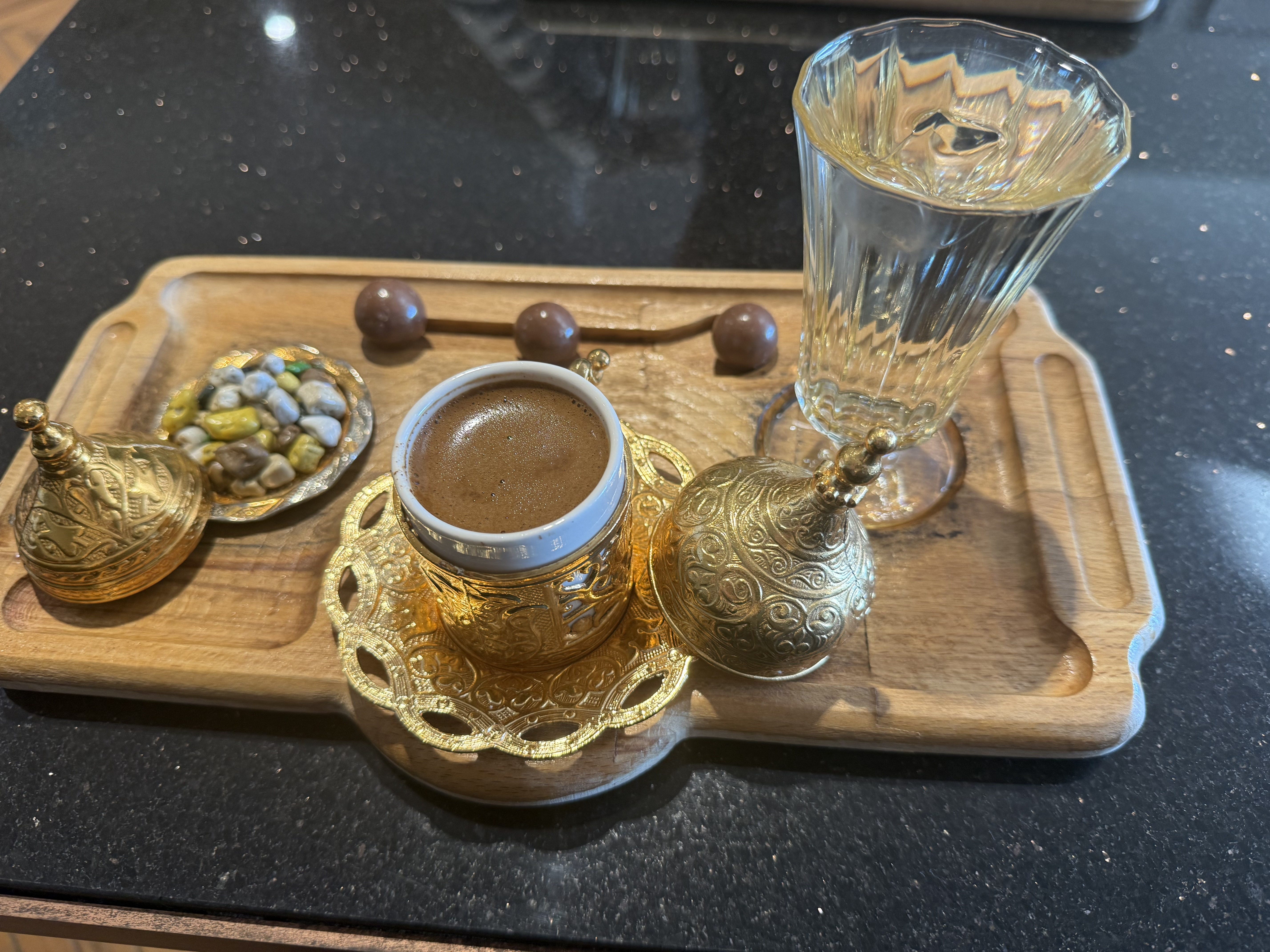
I’ve spent time in the Islamic world on a number of occasions, but never in a setting as cosmopolitan as this one. The cultural admixture is one of its most salient features. Young women in shorts and t-shirts message their friends while they walk alongside others in burqas and niqabs. Young men hobnob in the streets and smoke cigarettes as they beckon you into the restaurants where they work. People from all over the world gather here for commerce, tourism, and job opportunities. Much of the unskilled workforce comes from Central Asia. Our waitress at a cafe, who might have been 18 years old, told us she was from a small town in Turkmenistan. She is one of a multitude who have come to Istanbul seeking the benefits of a bustling economy particularly geared toward the service industry.
Islam is everywhere. Mosques are ubiquitous and often striking in their beauty and architecture. The call to prayer is loud and proud, and it comes to you five times each day from the minarets that punctuate the city’s landscape. Over 99% of the population is Muslim, though, as you might expect, levels of devotion vary widely. Islam is as much of a cultural identity as a religion here. To be Turkish is to be Muslim.
The Christian population of Türkiye is minuscule—less than 1%. Just prior to WWI, 20-25% of the population of the country was Christian. A decade later, the number was down to around 5%. What happened? The Armenian, Greek, and Assyrian genocides resulted in the deaths of over 2 million Christians. These atrocities were followed by the 1923 Greek-Turkish population exchange, which forcibly relocated most remaining Christians to Greece. After such events, one is not surprised that the Christian population has only continued to decline.
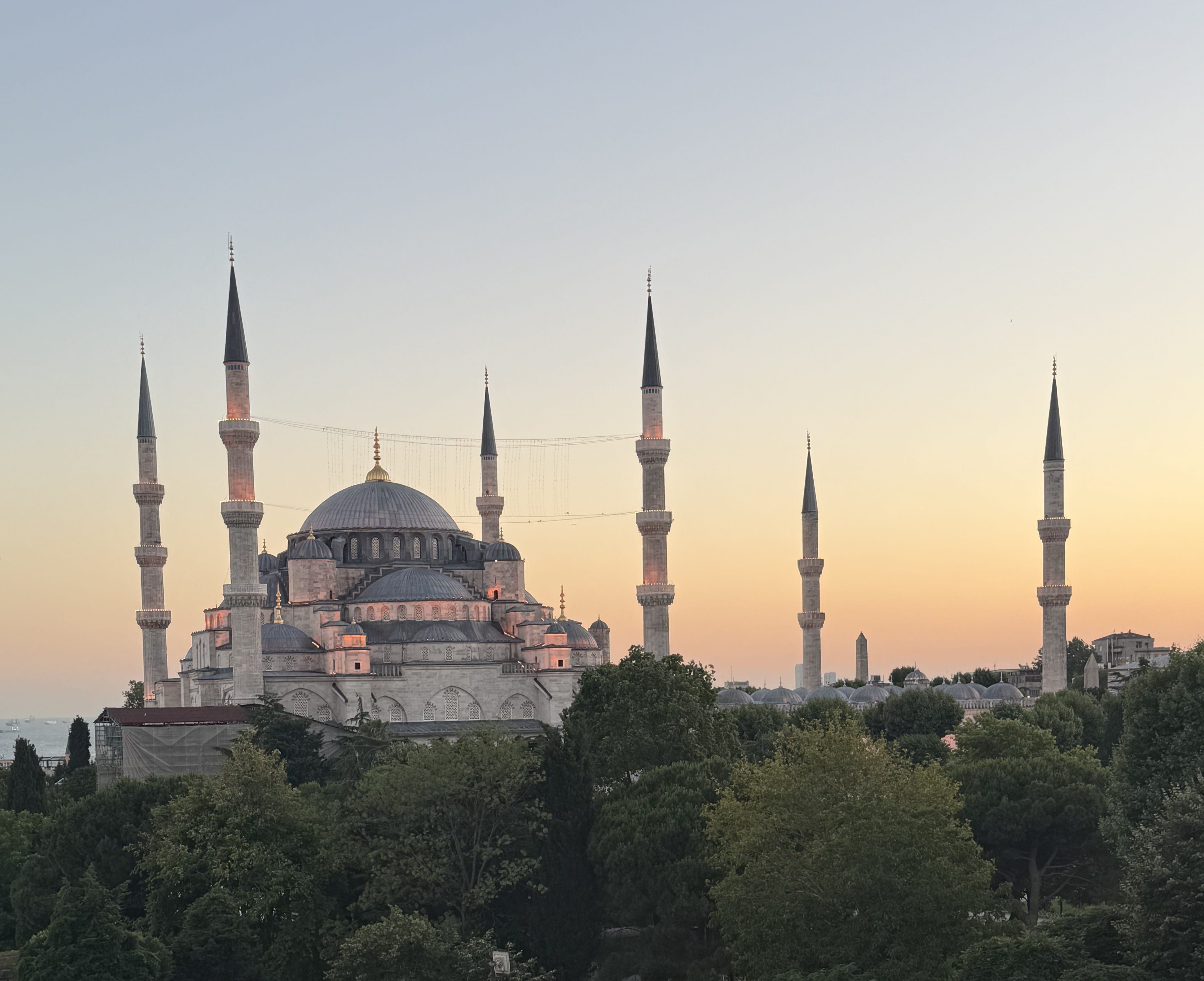
Today, however, Türkiye is not a radical Islamic state. By virtue of its constitution, it is actually a secular state, though, just as in the U.S., what that means is a matter of debate. The imams are employees of the state, perhaps in part so that the government can monitor them. The Turkish government has taken a hard line against radical Islamic groups. If it continues to do so, Türkiye will continue as a regional leader in commerce, trade, politics, and culture.
Touring Hagia Sophia was one of the more memorable moments of this journey. Today it’s a mosque, though it was a church from the 6th-15th centuries. Although it has been under Islamic control for hundreds of years, many of the Christian mosaics still remain intact.
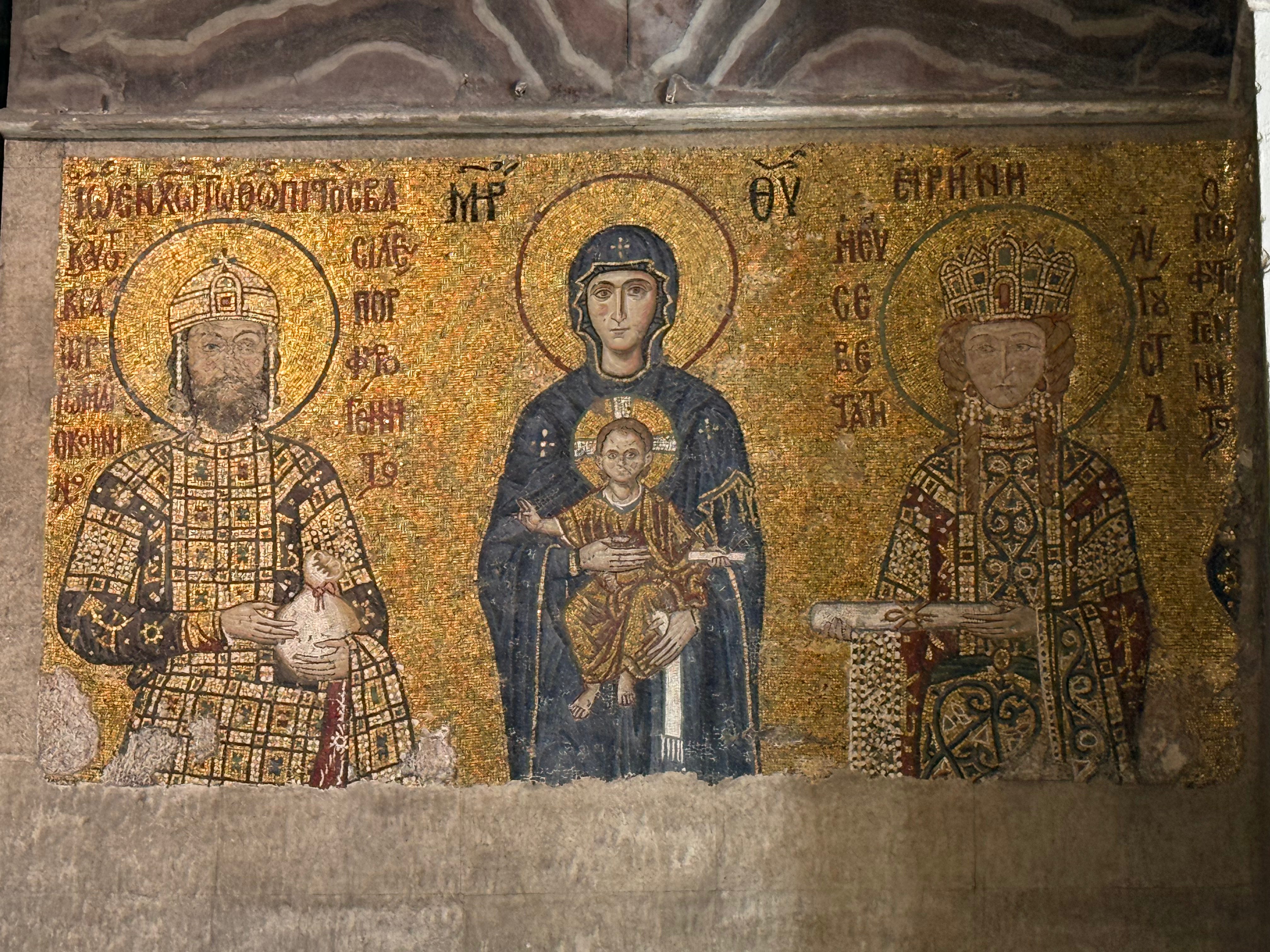
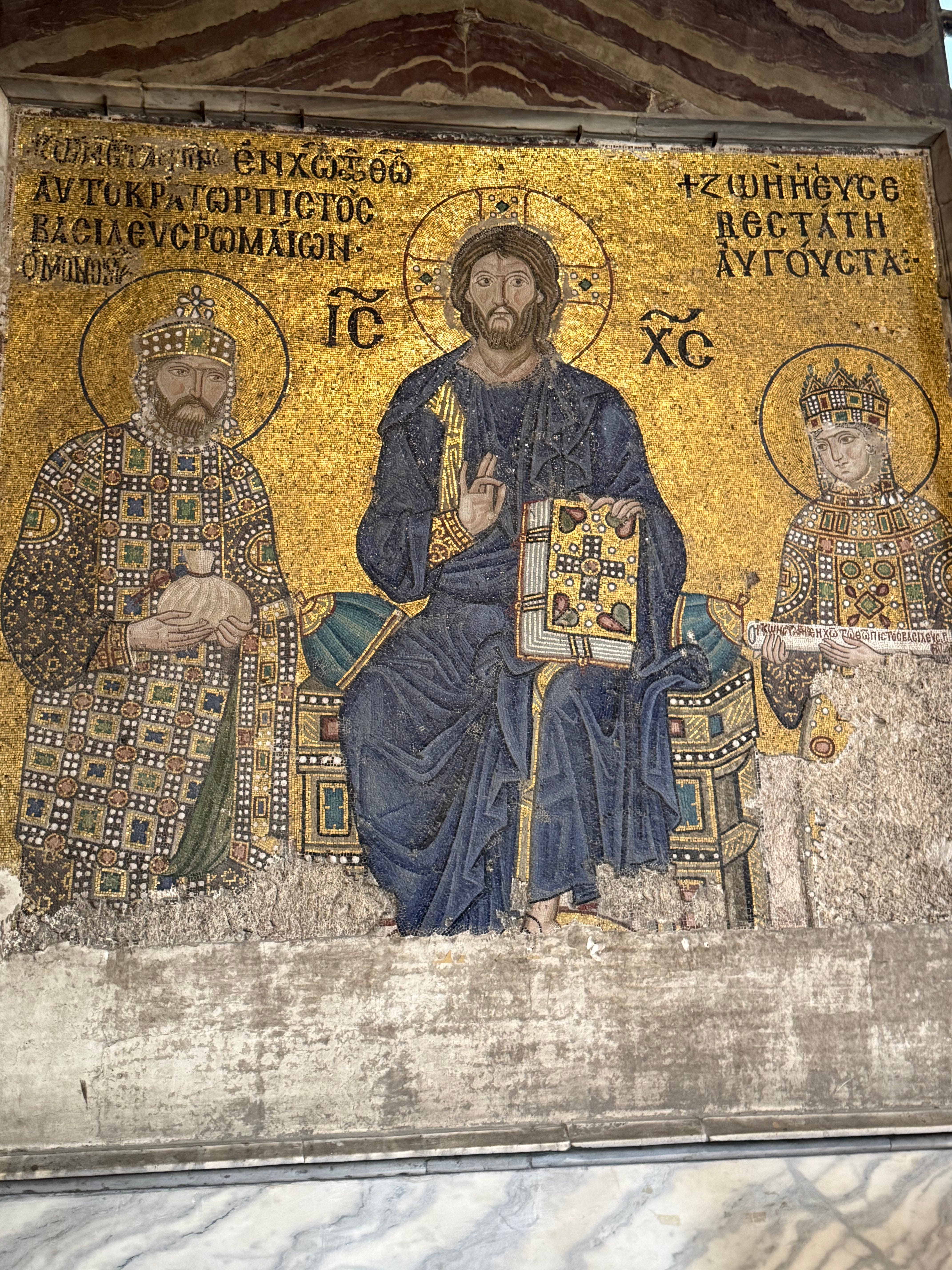
Make no mistake, however, this is a Muslim space in an Islamic world.
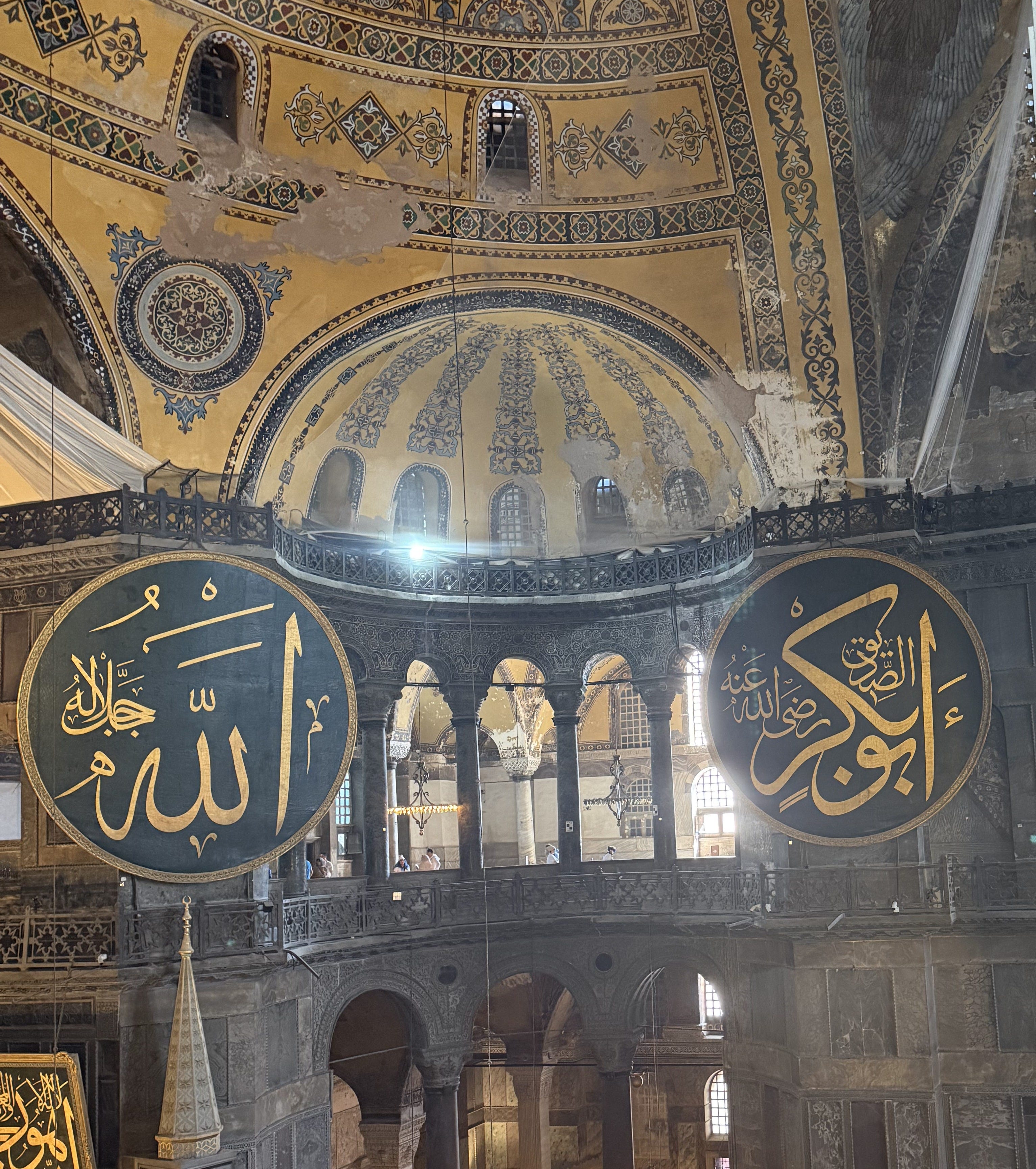
Giant shields with writing from the Qur’an line the main sanctuary. The bottom floor is only for Muslims. This is a working mosque, and they do not want their prayers interrupted by tourists.
Walking through this great city, learning about its past and traditions, touring the once-Christian Hagia Sophia, I was struck by how very different this world is from the post-Christian West in which I live. Islam is slowly, patiently, and intentionally building civilization. They’re playing the long game, and they have been doing so for centuries. They protect their traditions. We in the West ridicule our own. They protect religious life. We are devolving into a highly individualized neo-paganism. Islam has no crisis of confidence about the truth and value of its religious claims. We in the West have not been able to say the same for at least 300 years.
In his book Dominion, Tom Holland argues that the values of the Western world are rooted in Christianity. We hold up ideals such as tolerance, justice, human rights, and care for the poor and weak, but where did they come from? These are Christian ideals that have been pried away from the faith that is their source. The problem is, they cannot subsist apart from Christian devotion. G.K. Chesterton commented with remarkable prescience on this matter:
The modern world is not evil; in some ways the modern world is far too good. It is full of wild and wasted virtues. When a religious scheme is shattered (as Christianity was shattered at the Reformation), it is not merely the vices that are let loose. The vices are, indeed, let loose, and they wander and do damage. But the virtues are let loose also; and the virtues wander more wildly, and the virtues do more terrible damage. The modern world is full of the old Christian virtues gone mad. The virtues have gone mad because they have been isolated from each other and are wandering alone. Thus some scientists care for truth; and their truth is pitiless. Thus some humanitarians only care for pity; and their pity (I am sorry to say) is often untruthful.
The key values of Western civilization will not inhere indefinitely without the faith that gave rise to them. The signs of Western decline are not hard to find. The fertility rate of almost every Western country is below the 2.1 replacement rate. Assisted suicide is on the rise, including among people who do not have terminal illnesses. The abortion rate is rising in several Western nations, including the U.S. Detected cases of human trafficking are on the rise. Trust in our institutions is failing. We have lost a common cultural narrative. I’m not trying to go all Rod Dreher on you right now, but we need to take account of what’s happening. As Jim Collins said, we have to confront the brutal facts. And the brutal facts point to this truth: as Christianity goes, so the Western world goes. If Christianity continues to decline, something will take its place. Nature abhors a vacuum. As we see in Western Europe, Islam is willing and ready to step in. What happens over the next decade will determine a great deal about the future of countries such as the U.K., France, and Germany.
Islam is building a world. Across much of the globe, that world is ascendant.
What, O Western Christians, are we doing?
Good piece. Despite appearances, Turkey is NOT a secular nation. Oh, the purport to be one, but at the end of the day, when push comes to shove, they will tow the Islamic line. They are not an ally of the US and should not be treated as one for all the reasons you site, they encourage the declining Christian. We in the Western world would be wise to heed your warning, but, alas, I fear we will not.
Great narrative description. I enjoyed reading it. Thanks.
What we, the Western World, from my perspective, are doing includes:
1. Never reading the Qu'ran to gain a foundational knowledge of Islam. Muslims don't either, they take the word of their professional religious leaders that they are good and peaceful people. If they read it and decide to follow its teachings, they become jihadists and denigrate females.
2. The Christians in the Western World typically don't study their holy book, the Bible, either and rarely have dialogue about what it teaches. Like the Muslims, they also take the word of professional religious clergy about what the Bible teaches them to do. That typically includes: be nice, go to church, listen to a monologue sermon, give money to the church for maintenance of the physical plant and employees, encourage others to go to church and do all the above and have little to no true fellowship with dialogue, peer accountability, encouragement, or minister to each other. If they did they could change the world.