

Perfectly Pagan
Eugenics and Down Syndrome

If you spend any time at all on social media, you’ve no doubt seen this post on X, or at least responses to it. Someone named Jesse Ridgway offered the following justification after he and his wife elected to abort their child with Down syndrome. Apparently he has fans. I am not one of them.

Because the post from X abbreviates when reposted here, I’ll quote the whole thing:
This week, my wife and I made the very difficult decision to terminate the pregnancy due to Trisomy 21.
The choice was not made lightly. We really appreciate all of the personal stories that you guys shared with us, especially the unconditional support we received from fans with no matter what we decided.
I know some of you may be very disappointed to hear this news. We are devastated. This has been extremely traumatic for both of us, especially Ashley.
She underwent the procedure earlier this week and is on the mend. Thankfully, everything went smoothly, but emotionally we are drained.
Trisomy 21, also known as Down Syndrome, is caused by an extra chromosome. It is caused by an error in cell division, like a glitch. The odds of a baby having it is 1 in 1000.
When I first confronted this news, I was shocked but optimistic. If they’re a little slow intellectually, then we’ll make it work. I signed on to be a parent, come what may…but I just didn’t fully understand what Down Syndrome entailed.
Once we made it public, it became clear that MOST people don’t know what Down Syndrome entails (and no, it’s not the same as Autism):
50% of babies with DS have heart defects. 75% will have hearing challenges. Over 50% will have vision problems. Impaired immune function, developmental disabilities, learning disabilities, delayed physical development, poor muscle tone, structural issues with face, decreased lifespan, etc…Sadly, the list is long, feel free to look it up…Down Syndome isn’t a “blessing”, it is objectively shitty from a health perspective.
I didn’t realize just how rough it is for the child, let alone the family…more often than not, they would be fully dependent on others for the rest of their life.
The miscarriage risk is also close to 50%, which made matters worse…they may never see the light of day and it puts Ashley further at risk.
We spoke with doctors, friends, family and genetic counselors and learned that up to 90% of women terminate their pregnancy after learning the baby has Trisomy 21.
This was WAY higher than I expected, I thought it would be lower given that I hear so many say they kept or would keep the baby. I believe that’s because most terminations happen privately, it feels shameful. A lot of judgment being cast.
You never think you’d be in this type of situation until it happens to you and then things change.
To all of my fans who have weighed in on this topic who have Autism, Down Syndrome or any other conditions…we appreciate you. You matter a lot and we’re glad you’re here. I commend you and your families for having the strength and courage to push forward.
As for us, we made a difficult decision that we believe in the long-run will be beneficial for our family. Thankfully, we had a choice.
It will take a little time to move on, but we are excited to try again in the future and hopefully have a better outcome.
Love you guys & thank you for understanding.
The part in which he expresses appreciation to their fans with Down syndrome is particularly rich. “You matter a lot and we’re glad you’re here.” Really? That doesn’t seem all that consistent with the rest of what you’ve written, Jesse. Color me skeptical that you can believe people “matter a lot” and simultaneously advocate for their systemic elimination. You have to fish or cut bait, Jesse.
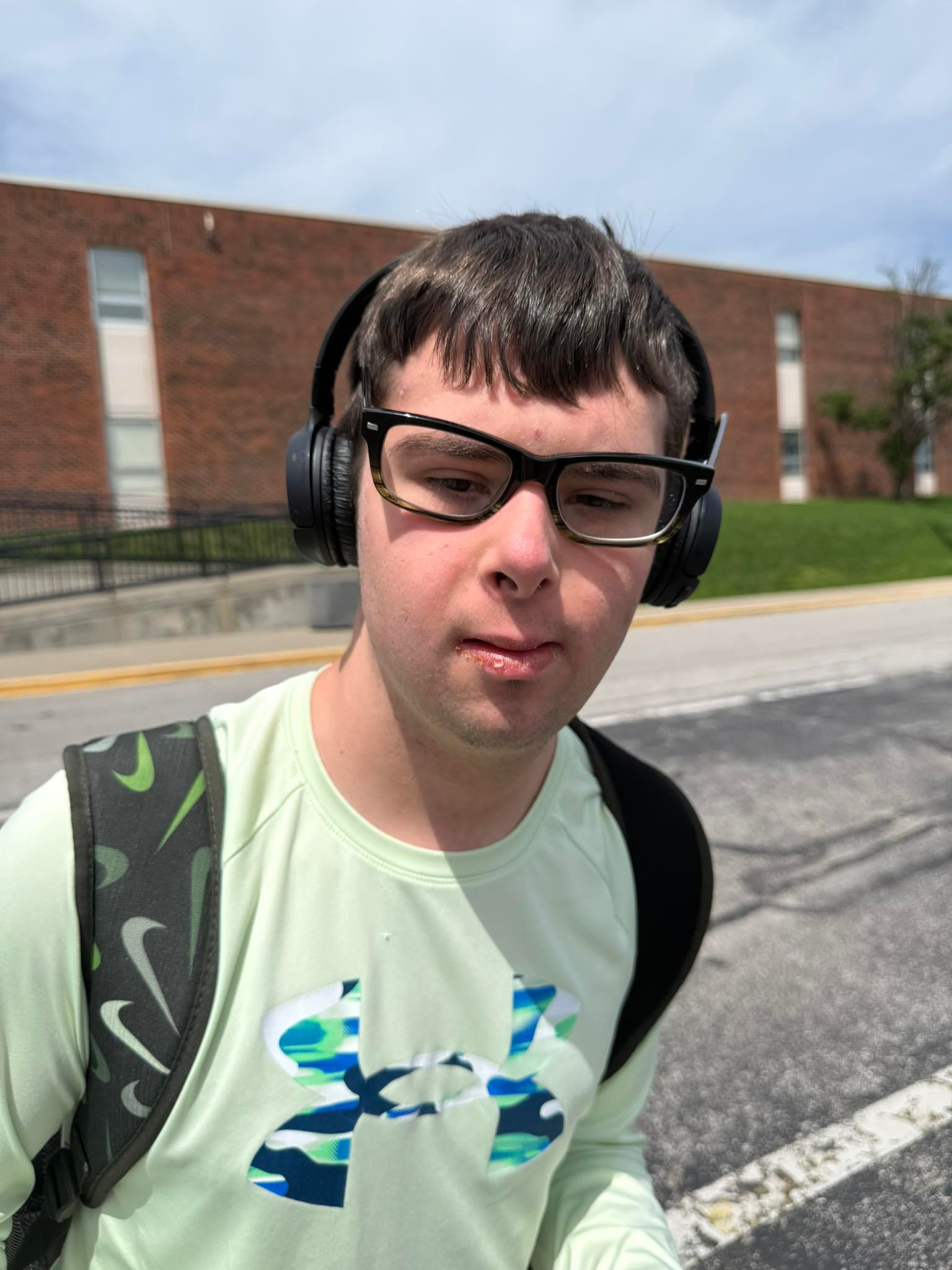
My son Sean has Down syndrome. He is also autistic. He is also hard of hearing. He has low tone. He had open heart surgery at four months of age. Apparently for Jesse, who has many fans, these factors are sufficient to disqualify him from life. Such a perspective is perfectly suited to the spirit of the age. In the emergent neo-pagan worldview that has taken root in the Global West, human life is primarily instrumental. It is not sacred. Its value is not inherent. If you are disabled, if you are chronically ill, if you are too old, if you are a “burden” on society, it would be best for all if you were simply unalived.
This was very much the pagan perspective into which Christianity was born. Unwanted children were left to die. Doctors commonly administered lethal drugs as part of what they understood as a “good death.” Here we are again, though the difference is that many Christians have now adopted pagan values and decorated them with Christian window dressing. This is why the cultivation of Christian worldview is so important.
Ideas have consequences, and Jesse Of Many Fans is now peddling ideas with exceedingly dangerous consequences. Generally speaking, bad ideas never die. They go underground for a while and emerge once we have forgotten how terrible they actually were. One very evil idea is that of eugenics, or the elimination of people with undesirable genetic characteristics. Nazis were big on this, as you can imagine, but it wasn’t just the Nazis. The term was coined in the 1880s by a Brit, Sir Francis Galton, a cousin of Charles Darwin. Eugenic fervor took root in the U.S. during the early twentieth century. The Nazis simply played these ideas out to their natural end. I’m sure Jesse and his fans don’t realize the connection between their ideas and those that gave us the Holocaust, but the line of reasoning is the same. Some genetic characteristics render people unworthy of life. We are thus justified in putting them out of our misery.
When Ruth Marcus wrote an article saying she would have aborted a child with Down syndrome, I wrote an article for Touchstone called “The Life of Sean.” I don’t know how many people read it, but it seems to have gained some traction. I also recently wrote an article on Sean’s life for Covenant called “Power Made Perfect in Weakness.” I did my best in these articles to lay out a theological understanding of the lives of people with Down syndrome and other disabilities.
We have to keep making the case in public, not only for people with disabilities, but for all of us. The devaluing of any subset of human lives is inherently dangerous. Our inability to understand who and what we are poses an existential threat to humanity. In his work So You Think You’re Human? A Brief History of Humankind (Oxford, 2004), Felipe Fernandez-Armesto begins his study with the following statement, both provocative and chilling:
Here is a paradox. Over the last thirty or forty years, we have invested an enormous amount of thought, emotion, treasure, and blood in what we call human values, human rights, the defence of human dignity and of human life. Over the same period, quietly but devastatingly, science and philosophy have combined to undermine our traditional concept of humankind. In consequence, the coherence of our understanding of what it means to be human is now in question. And if the term “human” is incoherent, what will become of “human values”? Humanity is in peril: not from the familiar menace of “mass destruction” and ecological overkill—but from a conceptual threat (1).
In The Desecration of Man, Carl Trueman identifies theological anthropology—or the Christian understanding of what it means to be human—as the most crucial theological issue of our day.
[H]istory shows that particular eras raise particular questions. The fourth century was preoccupied with the doctrine of God as Trinity. The fifth century wrestled with the question of Christ’s humanity and divinity. The sixteenth century witnessed turmoil with the sacraments and church authority. Today the struggle is over anthropology. The creedal aspect of church life must therefore respond to this with a robust proclamation of what it means when the church declares men and women to be made in the image of God. That question, “What is man?,” is the question of our time.
Yes, yes, and yes. The issue of theological anthropology is at the center of most of the ethical questions the church faces today. We must be clear-eyed about this fact as we move forward. We must begin with the idea of humans created in the image of God and go from there. No other starting point will suffice.
I’ve been glad to see the outpouring of criticism of Ridgway’s post. Unfortunately, however, the post itself represents a very widely held perspective that involves several elements:
I am entitled to a perfect child.
Children are a matter of convenience.
People with disabilities are of less value than people without them.
I, not God, am the author of life.
In summary, I have the authority to decide if people are permitted to live based on the amount of perceived suffering it will cause me. None of these things is true, but that doesn’t stop large swaths of the population from believing them.
Raising Sean has not been easy. Our faith, however, teaches us that lives of ease are not our goal. The pursuit of them leads us into all kinds of sin—self-indulgence, pride, sloth, and greed. The life we should pursue is one of faithfulness, virtue, and love. Harriet and I have not been perfect parents, though she has been much more perfect than I have. And yet Sean has grown into a remarkable young man. He’s funny. He loves to tell jokes and tease his sister. He loves musicals and sings them loudly in his bedroom. He loves hugs. In his life he has identified two best friends: his brother Luke and a friend from church, Josh Stamps. He has a dog named Zoe that he calls his daughter. He can read. He’s fascinated by Indiana Jones. He collects VHS tapes. His favorite food is Tyson chicken nuggets, except when we go to a restaurant, in which case he orders french fries and cold water. His favorite song is “My Way,” by Frank Sinatra. He loves to visit his grandparents. He needs friendship, affirmation, and affection.
He is human.
He is human.
He is human.
So are those like him. And they deserve to live.
Great post. These lines particularly resonated. “Our faith, however, teaches us that lives of ease are not our goal. The pursuit of them leads us into all kinds of sin—self-indulgence, pride, sloth, and greed. The life we should pursue is one of faithfulness, virtue, and love.”
Thank you. When I read the account yesterday, the only theme that seemed to matter to the author of the article was the "hate" that was shown to them over their decision. The thing that was the most disgusting was them lamenting over how their 6 year old dog being treated for stage 4 renal falure was being used as a weapon...how far our culture has fallen.