

Jesus vs. Paul
Adventures in a false dichotomy

Some bad ideas demonstrate amazing resiliency. Among these resides the notion that Jesus and Paul somehow oppose one another. Normally, the argument goes something like this: Jesus preached about the kingdom of God. He himself was not the object of his proclamation. The kingdom of his preaching is one that inverts the values of this world. It lifts up the lowly and brings down the proud. Jesus taught us a better way to live in relationship to God and other people.
But then something terrible happened. Paul of Tarsus, that old Pharisee, had an experience that made him believe he was called by God to be an apostle and proclaim the message about Jesus. The problem, though, was that his preaching was not about the kingdom Jesus proclaimed, but about Jesus himself. Instead of inviting people to participate in Jesus’ kingdom, he preached a message that focused on Jesus’ death on the cross and resurrection from the dead. He was thoroughly uninterested in Jesus’ life and preaching, and obsessively focused on his death as a means of atonement. Paul’s message adulterated that of Jesus and thus changed the content of Christian proclamation even to the present day. Let’s just get back to Jesus, then, and forget about Paul.
Not to put too fine a point on it, to pit Jesus against Paul in this way is a theologically ham-fisted and frankly silly approach to the Christian faith. It involves underdeveloped notions of the ongoing work of God, the divine inspiration of holy Scripture, and the significance of canon (by which I mean here the Bible as a coherent, meaningful whole). It fails to account sufficiently for Jesus’ teaching about himself, and it presents a false dichotomy between the content of Jesus’ proclamation and the significance of his life, death, and resurrection.
Other than that, though, it’s fine.
The Kingdom and the Person
I’ve been reading Oliver O’Donovan’s The Desire of the Nations with a group of friends who are interested in political theology. It’s a rich, dense, programmatic volume. O’Donovan helpfully describes the relationship between Jesus’ preaching and the church’s post-resurrection proclamation of him:
Jesus proclaimed the coming of the Kingdom of God, but the apostolic church did not. It told the story of what happened when the Kingdom came: its conflict with the established principalities and powers and its vindication at God’s hand through Jesus’ resurrection. What the church proclaimed was not what Jesus had proclaimed, because it stood on the other side of that great crisis which his proclamation evoked. Yet it claimed continuity with his proclamation, because he, and his message of the Kingdom, had been vindicated (120).
The proclamation of Jesus and the proclamation of the church following his death and resurrection are different, but complementary. Together they represent a fulsome picture of God’s redemptive work. One without the other is insufficient. O’Donovan describes two temptations in this regard. The first is to develop a “Jesuology”—a focus on Jesus of Nazareth to the exclusion of the church’s post-resurrection reflection and proclamation. The second involves “championing the message of the cross and resurrection in a Christology which overwhelms Jesus of Nazareth” (120).
A Jesuology fails to reckon sufficiently with the theological significance of Jesus’ death, resurrection, and ascension. By the same token, to neglect the figure of Jesus of Nazareth is to miss his teaching in word and deed about the kingdom of God. Both approaches are theologically anemic. Each gives a taste of Jesus’ power and glory, but what we need is the full meal.
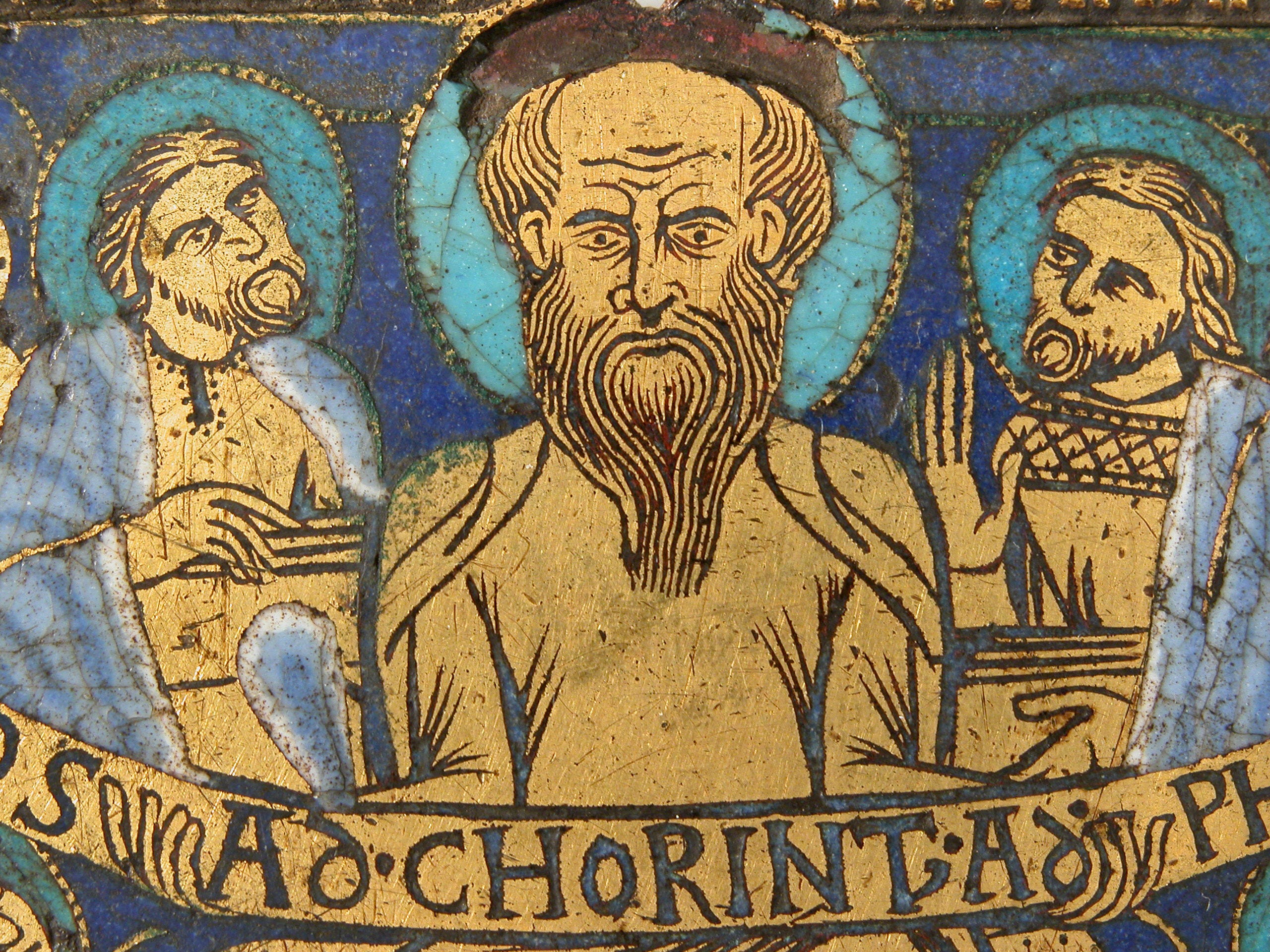
Did Jesus teach about himself?
As for the claim that Jesus did not teach about himself, but only about the kingdom of God, this is simply wrong. Jesus teaches about himself throughout John’s Gospel. Simply to privilege the Synoptic tradition (Matthew, Mark, and Luke) and wave away John’s account as a product of the church’s theological imagination is insufficient. John represents a theological tradition that runs parallel to the Synoptics, but that in no way means we cannot trust its account.
Yet we need not look to John to find Jesus making remarkable claims about himself. Consider some of the teachings we find in Mark, the earliest of the Synoptic Gospels. Jesus claims authority to forgive sins (2:10). He claims to be Lord of the Sabbath (2:28). He declares all foods clean (7:19). He three times prophesies his death and resurrection (8:31; 9:31; 10:33-34). He claims that he came to give his life “as a ransom for many” (10:45). He admits before the Sanhedrin that he is the Messiah and Son of God (14:61-62). I could cite numerous other examples, including examples from Matthew and Luke. The point is that, in the Synoptic tradition, while Jesus often speaks about the kingdom of God, he also speaks and behaves in ways that invite reflection on the significance of the man himself, including the meaning of his death and resurrection.
An Inspired Vision of the Christian Life
The NT letters (including the Revelation to John, which is a letter to seven churches) explore the Christian life in a fulsome sense. They open up the prophetic tradition that anticipated his coming. They give us insight into his incarnation. They probe the meaning of his death. They expound joyfully upon his resurrection from the dead. They do all of this in ways that demonstrate both theological diversity and unity. Some letters, like Romans, focus on the ways in which his cross and resurrection have freed us from the curse of sin and death. Other letters, like James, focus on the practical implications of his life and teachings. Together, they allow us to peer into the breadth and depth of God’s saving work in Christ.
In one sense, we can think of all of this material as midrash (theological commentary) upon Jesus. More than this, it is inspired midrash. After Jesus’ death, God continued to guide the church into truth, providing resources to draw us into his divine life and save us from sin and death. The Holy Spirit guided the production of these Scriptures for the salvation of the lost and the building up of the church. This was not a mistake or an afterthought. This was always God’s plan.
The writings of Paul, then, are not a betrayal of Jesus. They represent God-breathed reflection on Jesus’ person and work. If the message of Jesus and the message of Paul are different, they are nonetheless complementary. The fullness of God’s self-revelation means that one needs the other.
Of course, if we don’t believe that God has guided the formation of our Scriptures—if we don’t believe these texts are inspired—then all bets are off. The shape of the biblical canon becomes exclusively the product of human design. We lose the sense of a divinely ordained meaning to the whole of Scripture. Put differently, we lose the sense of Scripture as canon. We reduce the Bible to a set of texts related to each other by their connection to the religion of Israel and the early church, but with no divine purpose behind that collection. We no longer stand under the guidance of the early church’s sanctified reason and wisdom. We exchange the canons of our faith for the canons of secular modernity or the rabid tribalism of its postmodern offspring.
Paul, along with all the other writers of the New Testament, thought and wrote in the light of Jesus’ death and resurrection. It is unimaginable that they would have ignored these events. Rather than indicting Paul for saying something different from Jesus, it would be appropriate for us to give thanks for the blessing of his inspired writing that has so shaped Christian thinking across the centuries. The canon of Scripture is not a trick or a trap, but a gift, and we do well to receive it as such.
There is such joy in my heart about this article. There is a part of me that says, "how sad there is so much doubt within the scholarly of the church but how grateful the Lord has men like David Watson who can speak to the scholarly while all the time holding such faith and apparent belief in the holiness of the Word of God".
Then I got great joy thinking about the power of God to speak through many and because of the Holy Spirit's witness in the heart of a believer, there is a miraculous thread that runs all through and connects, witnessing one to another about the other.
It is His joy to us.
Another excellent article. I am so glad your new ministry has not stopped this writing ministry.
My 7:19 is parenthetical and belongs to a later time. It is well a substantiated text. If it belongs to a later time and it could belong a refactor other than Mark.It is not in red letters for those who like the words of Jesus. This should not be taken to mean that Jesus set aside dietary laws, but rather that a subsequent writer thought so.