

How To Be Relevant
No sneakers required

I used to work at a church that advertised itself as “relevant.” Granted, I was a nerd and not the target audience of those ads. Nevertheless, the quest for relevance—understood as “relatable” and “in step with the times”—struck me as misguided. It still does. The Gospel of Jesus Christ is invariably, unalterably, eternally relevant. The way to be relevant is not to try to engage the world on its terms, but to live unapologetically on ours. In so doing, we can invite people into a way of life that will transform their present, their future, and even their eternal destiny.
Here, then, is my preliminary list of ways we can become a maximally relevant church. And it doesn’t require smoke machines, expensive sneakers, or designer jeans.
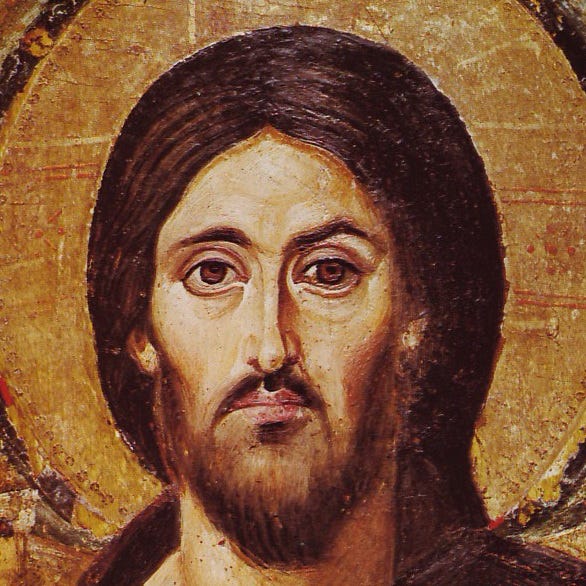
Proclaim Jesus Christ, crucified and risen.
Don’t back off an inch on all the strangeness of that story. God became a particular human being in a particular time and place among a particular people, Israel. His coming had been foretold by prophets. He was born of a virgin in a small, backwater town on the eastern frontier of the Roman Empire. His earthly ministry lasted a short three years. He taught us about the will of God, healed the sick, raised the dead, and cast out demons. The incarnate God died on a Roman cross for our sins. After three days he rose bodily from the dead. He ascended to heaven, and he will come again in glory. These are bizarre claims, yet if we try to tame them we will strip them of their power.
In 1 Cor 1:22-25, Paul writes,
Jews demand signs and Greeks look for wisdom, but we preach Christ crucified: a stumbling block to Jews and foolishness to Gentiles, but to those whom God has called, both Jews and Greeks, Christ the power of God and the wisdom of God. For the foolishness of God is wiser than human wisdom, and the weakness of God is stronger than human strength.
If our proclamation sounds like foolishness to those who don’t believe, that’s a sign that we’re doing things right. Sin has a noetic effect. Put differently, it affects the way we think. It causes us to perceive things in the wrong way. So, yes, to those who don’t know Christ, the message about Jesus may sound like fantasy or madness. Yet it isn’t our prerogative to adapt the “foolishness of God” to the spirit of the age in order to make it more palatable. Our calling is to proclaim Christ, crucified and risen. God will work through that act of obedience. We proclaim. The Holy Spirit converts.
Immerse ourselves in our ancient, inspired texts.
We tend to like new things, and we often equate relevance with being up-to-date, current, timely. Our propensity for what C. S. Lewis called “chronological snobbery” reveals a diminishment of the traditional, the ancient, the time-tested, the eternal. New phones are better than old phones. New music is better than old music. New ideas are better than old ideas. This way of looking at the world is as foolish as it is common. The myth of progress is hard to kill.
The Bible is very old, but its relevance to human life is unchanging. God is eternal. His truth is timeless. His word is true. Our scriptural texts have nourished the church across two millennia. The Bible is the fountainhead of Christian theological reflection. It speaks to every historical moment but transcends them all. It directs our minds to the source of our being and teaches us what it means to have new life. It is a conduit of the Holy Spirit, who makes us new by drawing us into the life of God. The new iPhone can’t do that. AI can’t do that. Self-driving cars, the new Taylor Swift album, or the next iteration of the sexual revolution are all, in the words of Qoheleth, simply vanity, a vapor.
In this era of “liquid modernity,” characterized by constant change and uncertainty even about the short-term future, the stability of these ancient texts is a comfort. When we immerse ourselves in Scripture, we find we are not tossed about by every wind of doctrine, every new idea, every cultural trend as we once were. Christ taught us, “[E]veryone who hears these words of mine and puts them into practice is like a wise man who built his house on the rock. The rain came down, the streams rose, and the winds blew and beat against that house; yet it did not fall, because it had its foundation on the rock” (Matt 7:24-25). As odd and ancient and foreign as it may seem to us at times, the inspired word of God is invariably relevant.
Eat his flesh and drink his blood.
In John 6:53-58 we read,
Jesus said to them, “Very truly I tell you, unless you eat the flesh of the Son of Man and drink his blood, you have no life in you. Whoever eats my flesh and drinks my blood has eternal life, and I will raise them up at the last day. For my flesh is real food and my blood is real drink. Whoever eats my flesh and drinks my blood remains in me, and I in them. Just as the living Father sent me and I live because of the Father, so the one who feeds on me will live because of me. This is the bread that came down from heaven. Your ancestors ate manna and died, but whoever feeds on this bread will live forever.”
His disciples, which here refers to a larger group of people than just the twelve, said to him, “This is a hard teaching. Who can accept it?” (6:60). Jesus admonishes them, saying, “The words I have spoken to you—they are full of the Spirit and life” (6:63). The result was disappointing if unsurprising: “From this time many of his disciples turned back and no longer followed him” (6:66).
When we come together to receive the Lord’s Supper, Christ is truly present in the elements. How is he truly present is a mystery—a truth too deep for the human intellect, though different traditions try to explain this truth in different ways. Nevertheless, when we receive the bread and the cup, we receive Christ.
The Lord’s Supper is an essential element of Christian practice, though one that many Protestants regard with too little seriousness. This is not a new problem. In 1788 John Wesley wrote, “It is no wonder that men who have no fear of God should never think of doing this. But it is strange that it should be neglected by any that do fear God, and desire to save their souls; And yet nothing is more common” (“On the Duty of Constant Communion”). In the same sermon he wrote, “It is the duty of every Christian to receive the Lord’s Supper as often as he can.” Not only did Christ command it, but it is spiritual nourishment for us.
What a strange practice we Christians have. This is my body, goes the ritual. This is my blood of the new covenant, poured out for you and for many for the forgiveness of sins. It’s no wonder the early Christians were accused of cannibalism. And yet Jesus was clear: “I tell you, unless you eat the flesh of the Son of Man and drink his blood, you have no life in you.” The Lord’s Supper is perennially relevant because it is the food and drink through which God makes us holy. If it seems strange or off-putting to those who do not share our hope in Christ, we can only pray that God will open their eyes to its immeasurable worth.
Live in Life-Giving Ways
The early Christians were a strange lot by Roman standards. They neither aborted their children nor left them exposed to die. In fact, they would find and care for exposed infants. They collectively cared for the widows in their community, since widows were susceptible to isolation and poverty. They cared for the poor. As time went on, the Christians began to build orphanages and hospitals. In the pagan world of the Roman Empire, life was cheap. The Christians came along and lived in ways that communicated the sacred worth of human life.
Once again, we find ourselves in a world in which life is cheap. We can order abortion-inducing pills through the mail. In some parts of the Western world, we have “cured” Down syndrome by terminating all the pregnancies in which this condition is detected. We are increasingly willing to kill the old, the sick, the disabled, and the mentally ill through what we euphemistically call “medical aid in dying,” or “MAID.” Around 27.6 million people today are caught up in human slavery. A million of those are in the United States, where we “abolished” slavery in 1865. Popular culture celebrates all manner of hedonism, conveniently ignoring the meaninglessness, sorrow, broken relationships, and death that flow from such behavior. Carl Trueman frames the matter perfectly in the title of his recent book, The Desecration of Man. We have de-sacralized humanity. We have rejected our own sacred worth and essential nature. Humans are cast as sentient lumps of meat upon which we may impose whatever form or meaning suits our tastes.
If we really want to be relevant to people who are living with the loss of meaning and identity, the sense of alienation and isolation so characteristic of Western liquid modernity, a different way of living is in order. How we spend our time and money, what we do with our bodies, our discourse on social media, the public policies we support, and the shape of our families communicate our values. Can we live in ways that demonstrate our belief that human beings—all of us—are created in the image of God and of sacred worth? Can we re-consecrate humanity? Can we live in the mystery that we are fearfully and wonderfully made? A truly relevant way of life will be one that leads to life. It will be out of step with the ambient culture, but that is no diminishment of its importance.
A Better Strategy
For decades now, various evangelistic strategists have told us that “relevance” means looking and sounding more like the unbelieving world. This is wrong. Such strategies have the form of relevance without the power. The gospel in all its fullness is unavoidably relevant. It will change hearts of stone to hearts of flesh. It will raise the dead to life. It will provide meaning amid chaos. We can invite people into a new way of living and trust in God to open their eyes to the truth embodied in our families, friendships, and communities of faith. A faith that does not transform is utterly irrelevant. If we follow the example of the first Christians and embrace all the particularity and strangeness of our faith, we will, like them, see the gradual transformation of the world.
Don't stop now! You've started a fire with lots of pitch in the wood. The message burns hot and clean. This is "real relevance" talking, no jargon, no compromise, no obfuscation. "Everybody ought to know."
Amen, Dr. Watson! Surely, anyone who lives out the Kingdom life into which we’ve all been called will not make us friends with the unbelieving world. As John wrote in his first epistle, “Do not love the world or the things in the world. If anyone loves the world, the love of the Father is not in him”. (1John 2:15). The early Church faced opposition, as they they lived out the New Covenant in Jesus’s blood, but the KOG thrived. The same is true today.